By Juan Vega, SIOR, CCIM, Executive Managing Director at Colliers
For years, healthcare providers looking to expand had a fairly straightforward choice: lease space in a newly developed medical office building or build to suit if the patient demand justified it.
Today, that equation has changed dramatically.
Construction costs have increased to the point where many new medical office developments simply don’t make financial sense without significant pre-leasing commitments. As a result, speculative medical office development has slowed considerably, and many healthcare providers—particularly independent physician groups and regional practices—are finding themselves priced out of new construction altogether.
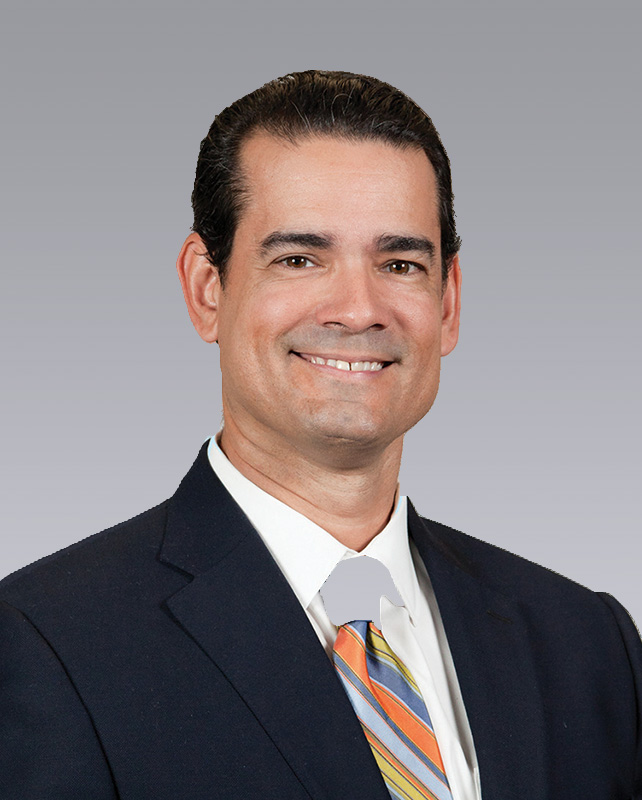
Juan Vega, SIOR, CCIM, Executive Managing Director at Colliers
Take, for example, recent construction cost estimates for an MOB in the North Tampa market: shell pricing is estimated at $250 per rentable square foot, land cost is rougly $65 per rentable square foot and tenant improvements are often priced at north of $300 per rentable square foot. Florida Orthopaedics Institute recently purchased a new headquarters building at 5901 E Fowler Avenue for over $636 per square foot. Convert that to rent using a 6.0 cap rate, and the rents would be approximately $38- $39 per rentable square feet triple-net, before expenses.
At the same time, healthcare organizations continue shifting more services to outpatient settings, increasing demand for medical office space just as new supply becomes more limited.
Those two trends are colliding. The result is that second-generation medical office space and well-positioned traditional office buildings are becoming increasingly important options—not simply because they’re available, but because they may be the only financially sustainable choice for many providers.
Sticker shock is becoming the new reality
One of the biggest changes healthcare users are experiencing today is simply the cost of occupancy.
Existing second-generation medical office space may still lease in the mid-$20s per square foot on a triple-net basis in many markets. Newly constructed space, however, can easily command rental rates in the $35 to $40 per square foot range—or higher, depending on the market and building type.
Those increases aren’t the result of landlords charging more simply because they can. Land costs have increased. Construction costs have risen significantly. Financing remains more
expensive than it was just a few years ago. Owners of newly developed buildings need higher rental rates simply to achieve the returns that were once possible at much lower costs.
The economics of development have fundamentally changed.
For many physician groups, particularly practices operating under capitated reimbursement models or other cost-sensitive payment structures, absorbing those higher occupancy costs becomes increasingly difficult. Real estate expenses that might have represented a manageable portion of operating costs only a few years ago can now challenge the financial model of an independent practice.
In many respects, those pressures are contributing to the continued consolidation of healthcare providers, as smaller practices seek the scale necessary to offset rising operating expenses.
Second-generation space offers a different value proposition
This is why second-generation medical office space deserves renewed attention.
Existing medical suites often include exam rooms, reception areas, waiting rooms, plumbing infrastructure and other improvements that would be expensive to recreate today. Even if renovations are necessary, practices typically avoid many of the costs associated with building from a cold shell.
Perhaps more importantly, these spaces can often be occupied much faster than waiting for new construction.
Location also matters. Many existing medical office buildings occupy mature healthcare corridors near hospitals, outpatient campuses and established residential neighborhoods where developable land has become scarce.
For regional healthcare providers trying to maintain convenient patient access while controlling occupancy costs, those locations can be difficult to replicate through new development.
Don’t overlook opportunities outside traditional medical buildings
One trend likely to accelerate over the next several years is the adaptive reuse of traditional office properties.
Many conventional office buildings are now trading well below replacement cost. For investors and healthcare users willing to think creatively, some of these properties represent compelling opportunities.
If zoning permits medical use, parking ratios can accommodate patient demand and the building’s infrastructure supports clinical operations, older office buildings may provide an attractive lower-cost alternative to new construction.
The healthcare real estate industry has already seen this concept succeed through the redevelopment of former retail centers into medical campuses and “medical malls.” Similar opportunities may increasingly emerge within the office sector, as owners reposition underutilized buildings for healthcare tenants.
Not every office building is a candidate for conversion, but practices and investors who broaden their search beyond traditional medical office inventory may uncover opportunities that simply don’t exist elsewhere in today’s market.
Infrastructure still determines success
While second-generation opportunities can create significant savings, providers shouldn’t assume every existing building will meet their operational needs. Medical uses place substantially greater demands on buildings than traditional office tenants.
Electrical capacity, HVAC systems, plumbing infrastructure and data connectivity all deserve careful evaluation before lease negotiations move forward.
In some cases, the cost of upgrading mechanical, electrical and plumbing systems can erase the apparent savings of an otherwise attractive property. That’s especially true for specialty practices with imaging equipment, surgery centers or other uses requiring intensive infrastructure.
Understanding those costs before signing a lease is essential.
Parking, zoning and future flexibility matter more than ever
Healthcare providers should also evaluate whether an existing property truly supports long-term operations.
Parking ratios that work well for a traditional office tenant may be insufficient for a busy physician practice with continuous patient turnover. Likewise, providers should confirm zoning allows their intended medical use while considering future expansion plans, accessibility requirements and patient convenience.
The lease itself should also anticipate growth whenever possible by addressing renewal options, expansion rights, tenant improvement responsibilities and future infrastructure needs.
As competition for quality second-generation assets increases, negotiating favorable lease terms will become just as important as selecting the right building.
Experience can uncover value others miss
As more healthcare providers pursue existing medical space, competition for quality second-generation properties will likely intensify.
At the same time, investors are increasingly evaluating older medical office buildings—and even conventional office properties—as acquisition opportunities because they can often be purchased at a significantly lower basis than developing new product. For example, an investor may acquire a vacant office building for $100 to $150 per square foot, well below replacement cost, then renovate the space with market-rate tenant improvements while remaining far below the cost of developing a new building.
Finding value in today’s market requires looking beyond asking rent alone. It means understanding replacement costs, construction realities, infrastructure limitations and how healthcare providers actually deliver patient care inside a building.
That’s why having an experienced healthcare real estate advisor involved early in the process has become increasingly valuable. The right broker partner can identify hidden costs, evaluate whether an existing building can truly support a medical practice and negotiate lease terms that protect the provider over the long term.
As healthcare continues migrating toward outpatient care, demand for medical office space isn’t going away. But the economics of delivering that space have changed.
For regional healthcare providers willing to think differently—and carefully evaluate second-generation opportunities—the current market presents challenges, but also opportunities that simply didn’t exist a decade ago.
Juan Vega is an Executive Managing Director at Colliers and is based in Tampa, Florida. He can be reached at (813) 784-7312 and juan.vega@colliers.com.
The full content of this article is only available to paid subscribers. If you are an active subscriber, please log in. To subscribe, please click here: SUBSCRIBE