




Minneapolis, Minn. (July 24, 2026) — The optimism that shaped the healthcare real estate (HRE) sector at the start of 2026 has given way to a more cautious, selective market at the halfway point, according to a mid-year update from Davis, a national healthcare real estate firm. Persistent interest rate volatility, disappointing inflation data and geopolitical shocks — including the conflict in Iran and uncertainty surrounding the Strait of Hormuz — have stalled the anticipated rate cuts that many investors had built into their 2026 plans, even as underlying demand for healthcare space remains strong.

Mark and Stewart Davis
“Coming into the year, we expected enough clarity on rates to be aggressive in capital deployment,” said Stewart Davis, Executive Vice President, Davis. “That window hasn’t materialized the way we hoped. Rates continue to creep up day to day, which makes it very difficult to confidently underwrite a deal today when things could change with a closing 60 to 90 days out.
As a result, Davis predicts that their 2026 acquisition projections could be lower by as much as 25%.
Rate Unpredictability Reshapes Underwriting
Interest rate volatility has become the defining challenge of the year’s second half. Davis pointed to swings of several basis points within a matter of days as evidence of how unstable the debt markets have become, a dynamic that leaves little room for error on deals with extended closing timelines.
To illustrate the risk facing pipeline deals across the sector, Davis recalled a 2022 acquisition opportunity in Alaska. A construction delay pushed the closing date out and during that delay, rates rose nearly 200 basis points. The potential for a repeat of that type of scenario reinforces the need for discipline.
“A deal that looks profitable today can turn upside down if rates move against you before closing,” Davis said. “Even larger, well-capitalized groups that can buy all-cash and refinance later are likely to underwrite more conservatively.”
A Regional Divide: Sunbelt Premiums vs. Upper Midwest Value
Regional pricing has diverged sharply in 2026. In high-growth Sunbelt markets — including Arizona, the Carolinas, Nevada, Texas and Florida — well-capitalized buyers are paying cash and, in Davis’s view, often overpaying based on favorable demographic and tax trends.
At the same time, some larger REITs and private equity groups have pulled back from Minnesota and the broader Upper Midwest amid perceptions about the state’s political environment. The retreat has left Davis, based in Minneapolis, with a smaller pool of competitors and comparably better pricing in its home market.
“It’s created an interesting dynamic,” Davis said. “We’re seeing groups overpay in markets that look attractive on paper, while a market like Minnesota, which we know extremely well, is being overlooked for reasons that have nothing to do with the underlying real estate fundamentals.”
Construction Costs and Labor Shortages Curb New Development
The economics of development have grown more difficult since the start of the year because of costs, lead times and labor. Shell construction costs for Class “A” MOBs, which don’t include tenant improvements, now average approximately $250 per square foot from roughly $150 per square foot in 2019. Lead times for critical components such as electrical switch gear can now stretch up to 18 months. Moving forward, an aging, largely unreplaced skilled trade workforce, particularly in sub-specialties like brick masonry, is expected to make labor even more expensive and scarce in the years ahead.
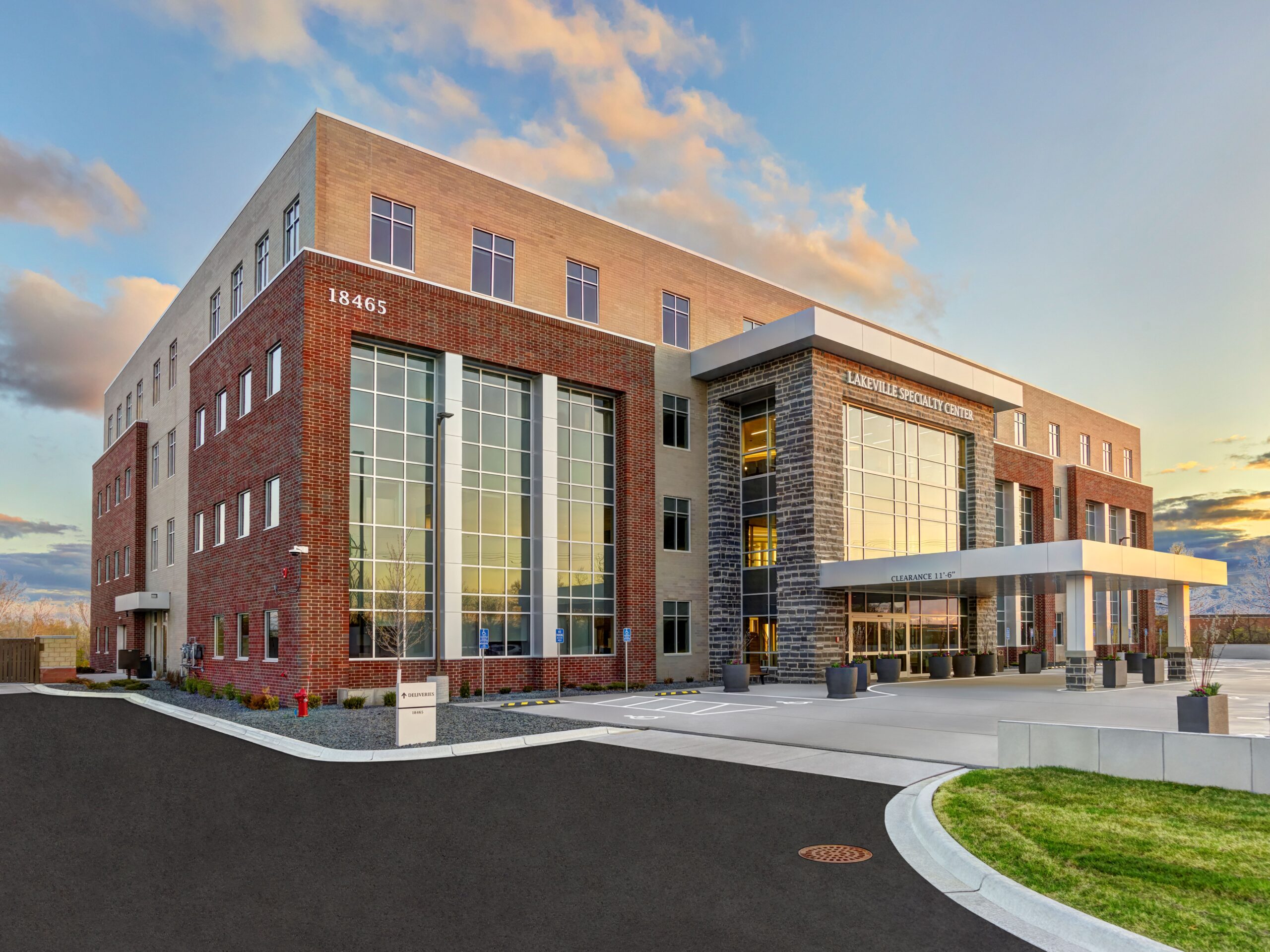
Lakeville Specialty Center
Health systems continue to face their own reimbursement and cost pressures and are opting to renew leases or move into existing second-generation space rather than commit to ground-up development. The rental rate for lease renewals and second-generation spaces may be 30-40% lower than newly completed construction.
“The demand for ambulatory care hasn’t gone away,” Davis said. “But the math on new construction is harder to make work than it was a few years ago, and that’s pushing health systems toward existing space rather than new builds.”
Healthcare Real Estate’s Long-Term Case Remains Intact
Despite near-term headwinds, Davis remains confident in the sector’s long-term trajectory. The firm points to the recent sale of Kane Anderson Real Estate to a British private equity group as evidence that healthcare and healthcare-adjacent real estate has moved from a niche allocation to a core one for institutional investors, alongside sectors like industrial and logistics.
“Healthcare real estate is still a fundamentally need-based asset class,” Davis said. “This year has required more discipline and more patience than we expected in January, but the long-term demand drivers — an aging population, the shift to outpatient and community-based care, and constrained supply — are still very much in place. “We believe the back half of this year and into 2027 will bring clarity to the market.”
# # #
About Davis
Davis, founded in 1986, is a national healthcare real estate firm offering expertise in development, property management, brokerage, investment, and consulting services to health systems, hospitals, medical groups, and other healthcare organizations. The company has developed over 40 Class A medical buildings totaling more than $500 million in development costs and completed 60 investment transactions totaling more than $800 million. Davis has negotiated more than 447 healthcare property leases with an aggregate value exceeding $1.1 Billion. The firm currently owns and/or manages 3,000,000 sq. ft. of Outpatient Medical Buildings (66 buildings) in 12 states, including MN, IA, IL, MI, OH, TN, CT, ME, AZ, ND, TX, and LA.
For more information, visit www.davishre.com.
The full content of this article is only available to paid subscribers. If you are an active subscriber, please log in. To subscribe, please click here: SUBSCRIBE
