The firm partners with experienced HRE firms to acquire ‘essential’ assets
By John B. Mugford
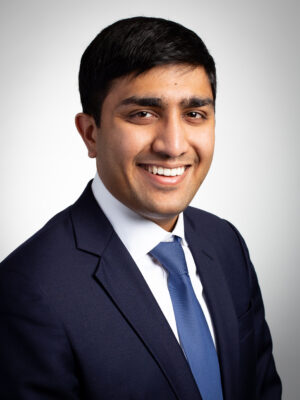
Aashik Rao
Although Toronto-based Fengate Asset Management has been quite active in the U.S. medical outpatient building (MOB) sector since 2024, the firm really grabbed headlines in mid-2025 when it partnered with Minneapolis-based MedCraft Healthcare Real Estate on the $283.3 million purchase of 24 MOBs from Cleveland Clinic.
At the time, the transaction marked the largest monetization, or sale of real estate assets, by a U.S. health system in nearly a decade. The landmark deal firmly established Fengate among the major foreign investment firms shaping the American MOB market and the broader healthcare real estate (HRE) sector.
Fengate, which focuses on infrastructure, private equity and real estate investments in North America, followed up that purchase with another headline grabber in fall 2025. That was a $323 million recapitalization of a portfolio of 18 MOBs and ambulatory surgery centers (ASCs) with about 750,000 square feet across 11 states. The seller was Nashville, Tenn.-based Montecito Medical Real Estate, which retained an ownership position in the portfolio.
Several months after those big acquisitions, in late April 2026, Fengate’s Aashik Rao, managing director of investments, took part in an investment-focused panel at the 2026 BOMA International Medical Real Estate Conference in San Diego.
“One of the things we like to see our capital do is to be put to use, and not just in a cash-out acquisition, but to actually be invested in the facilities, in the care and in the commitment that we had from Cleveland Clinic on that front, which was very meaningful to us,” Mr. Rao told the audience, “both in terms of the stories we sell to our LPs (limited partners) as to what’s being done with the money in a sale-leaseback transaction of that scale and size. That was a very important part of the transaction.”
He added that Fengate placed the facilities in the Cleveland Clinic transaction in an “open-ended vehicle … as we are always long-term investors but in an open-ended fund context, as we intend to own those assets into perpetuity. That’s because we view Cleveland Clinic as our long-term partner throughout our indefinite hold period.”
As of recent weeks, Fengate’s U.S. HRE portfolio comprised more than 75 properties with nearly $2 billion of asset value. The firm says it also has a “long history of investing in Canadian healthcare infrastructure through public-private partnerships. Our objective is to create a multi-billion-dollar healthcare platform developing and acquiring specialized healthcare assets across the U.S.”
Fengate’s U.S. HRE investment activity has continued in 2026, as the firm has invested about $660 million in HRE facilities year-to-date. Its focus is on what it refers to as “essential healthcare facilities,” including MOBs, ASCs, inpatient rehabilitation facilities (IRFs), small-format or neighborhood hospitals and other purpose-built facilities.
To learn more about Fengate and its HRE investment strategies, HREI recently spoke with Mr. Rao, who leads the healthcare platform.
HREI: When did Fengate first get involved in healthcare, why did it do so, and how does it fit into the broader portfolio?
Rao: Fengate’s healthcare experience began well before its recent U.S. expansion. The firm has invested in and developed healthcare facilities through Canadian public-private partnerships for many years. Before scaling the U.S. strategy, the team spent several years studying the sector, building relationships with healthcare specialists and discussing the opportunity with its institutional investors.
Fengate Infrastructure began actively deploying into the current U.S. healthcare strategy in 2024. The thesis is straightforward: Invest in specialized facilities that communities rely on, partner with high-quality health systems and operators; and structure investments for durable cash flow, which supports the kind of patient, long-term partnerships that health systems want.
HREI: What is Fengate’s approach to investing with other firms, perhaps HRE firms, in partnerships?
Rao: Partnership is central to our model. We invest alongside experienced healthcare developers and operators, through programmatic partnerships. Our partners bring deep sector expertise, development and operating capabilities, strong local relationships and long-standing relationships with not-for-profit health systems. Fengate provides flexible capital, the ability to invest across the risk spectrum and a collaborative, long-term investment approach.
HREI: Can you talk a bit about Fengate’s healthcare team? Is it solely dedicated to healthcare, or is it part of a broader team?
Rao: (The healthcare platform is) supported by an investment team within Fengate’s infrastructure group. Fengate manages $9 billion in equity commitments across $20 billion of assets. Over the course of our 20-plus year history, we have built a sophisticated in-house team that supports our growing healthcare portfolio and works alongside partners on development, construction, value creation and finance.
HREI: Fengate invests through both acquisitions and development. How much development is part of the strategy?
Rao: Development is an important part of our strategy, particularly where a facility can be purpose-built for a health system or operator under a long-term lease. We like development because it allows capital to create new healthcare capacity, improve access to care and deliver facilities designed around the provider’s needs.
It is also a highly competitive part of the market, so we are selective. We focus on opportunities where the health system or the operator is strong, the facility is essential, and our development partner has a demonstrated record of execution. Recent examples include the Palm Beach Gardens neighborhood hospital and medical outpatient development for Jupiter Health.
HREI: Where does Fengate’s capital originate from?
Rao: Fengate manages capital on behalf of a diversified institutional investor base across North America, Europe and Asia.
HREI: What funds does Fengate use and what types of facilities does it target?
Rao: Fengate invests through several infrastructure vehicles spanning core, core-plus, value-add and development risk profiles. The primary focus is on essential healthcare facilities, including medical outpatient, ambulatory surgery centers, inpatient rehabilitation facilities, small-format or neighborhood hospitals and other purpose-built facilities. We work with both not-for-profit health systems and for-profit operators.
HREI: Where does Fengate focus on the healthcare risk-return spectrum?
Rao: We invest across core, core-plus, value-add and development opportunities across both open-ended and closed ended fund products. The common thread is an essential facility, a strong health system or operator anchoring the building, strong underlying market, with an attractive basis for acquisition, and a clear path to value creation. That can mean long-duration income in a core investment, lease-up, or re-tenanting in a value-add asset, or delivering a purpose-built facility through development. We also invest in value-add opportunities, involving medical conversion to higher acuity medical, where redevelopment is possible at a much more attractive basis than new developments in a supply constrained market.
HREI: When it comes to making investments in the HRE sector, does the firm have an annual investment target or, more long-term, a goal for the eventual size of the portfolio?
Rao: We have meaningful capital available for healthcare and a defined investment period in which to deploy it. We are focused on the right transactions at the right time with the right operators, tenants and partners. We have deployed over $650 million in 2025 and 2026 year-to-date and look to continue to grow our deployment in the sector.
HREI: Does Fengate have a typical holding period?
Rao: Fengate is a long-term investor, but the expected holding period depends on the vehicle. Open-ended funds are designed to hold high-quality assets for the long term, without a planned exit, while closed-end funds generally have a defined life and may realize investments after the business plan has been completed.
HREI: Just to sum things up, how would you define Fengate’s healthcare strategy?
Rao: Fengate is building a scaled portfolio of essential healthcare facilities by partnering with leading health systems, operators and healthcare specialists. We invest across core, core-plus, value-add and development opportunities, but we remain disciplined about essentiality, facility specialization, market quality, tenant and operator quality, lease structure and risk allocation. The goal is not to be everything to everyone. It is to be a reliable, long-term capital partner that can help sophisticated healthcare organizations execute acquisitions, developments, recapitalizations and other strategic solutions to meet the rising need for healthcare infrastructure.
HREI: Is the healthcare market large enough for Fengate, and are you seeing enough opportunity?
Rao: Yes. We’ve deployed steadily since launching our U.S. strategy in 2024 and are seeing a broad range of opportunities, from competitive processes to off-market situations. Our recent activity and pipeline point to meaningful opportunity, and we remain disciplined, focused on transactions where we have conviction in the asset, the clinical use and the partners we’re working with.
HREI: Will Fengate remain active in a higher interest-rate environment, and does it have an advantage?
Rao: Yes. Healthcare demand is driven primarily by the need for essential services and long-term demographic trends. As a long-term institutional investor, Fengate can provide stable, flexible capital across market cycles.
We remain disciplined in our approach, carefully evaluating opportunities and investing where we believe we can be a strong partner and support the long-term success of healthcare projects.
HREI: Can the market expect Fengate to remain active in acquisitions and development?
Rao: Yes. Healthcare is a long-term strategic focus for Fengate and an attractive sector for our investors. We expect to remain active in both acquisitions and development. We will continue to be selective, with an emphasis on essential facilities, strong health systems and operators, appropriate risk allocation and partners with whom we can scale and build repeat relationships.
HREI: How long does Fengate expect to be involved in the sector?
Rao: We are building for the long term. The sector is supported by durable demographic and utilization trends, but our conviction also comes from the role these facilities play in delivering care. We intend to continue investing in the team, partner network and asset-management capabilities required to be a consistent participant through market cycles.
HREI: Is there anything else you would like to add?
Rao: The message we want health systems, operators and developers to hear is that Fengate is a committed, solutions-oriented capital partner. We have the ability to invest across different risk profiles and transaction structures, and we measure success by the quality and durability of the partnerships we build, bringing complementary capital, strong investment capabilities and long-term alignment.
The full content of this article is only available to paid subscribers. If you are an active subscriber, please log in. To subscribe, please click here: SUBSCRIBE