They’re benefitting from a competitive debt market, Winstead panel says
By Murray W. Wolf
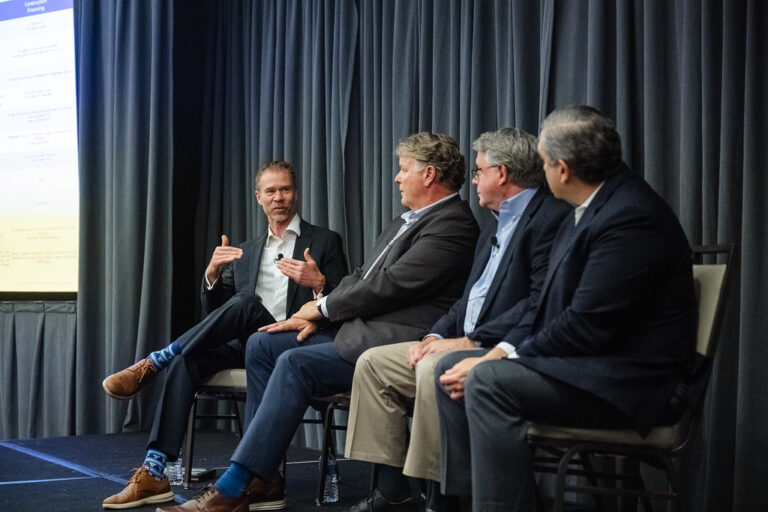
The “Lenders’ Playbook” panel discussion at the 2026 Winstead Medical Real Estate & Construction Forum April 15 in Nashville, Tenn., included (from left to right): moderator Steve Leathers of Transwestern and panelists Steve Reedy of First Citizens Bank, Winston Abbott of Siemens Financial Services and Joe Dominguez of BMO Financial Group. (Photo courtesy of Winstead)
The era of “easy money” might be over, but healthcare real estate (HRE) lenders are open for business in an increasingly competitive market, and that’s good for would-be borrowers.
That was one of the primary takeaways from a panel discussion featuring executives from major financial firms during the recent 2026 Winstead Healthcare Real Estate & Construction Forum in Nashville, Tenn. The second annual event, held April 15 at the Omni Nashville Hotel, featured six sessions covering the full range of HRE topics, including financing, investment, development and construction, as well as sessions featuring the most recent HRE market data and insights from healthcare system real estate executives.
The debt session, titled “Lenders’ Playbook: Financing Deals in Today’s Healthcare Real Estate Market,” was moderated by Steve Leathers, a St Augustine, Fla.-based senior managing director, Healthcare Capital Markets, with Transwestern Real Estate Services.
The panelists included executives from three of the HRE sector’s most active lenders:
■ Winston Abbott, VP, national sales manager, Siemens Financial Services, a subsidiary of Munich, Germany-based Siemens AG;
■ Joe Dominguez, director, BMO Financial Group (NYSE: BMO), the U.S. unit of the Bank of Montreal; and
■ Steven Reedy, head of Medical Office Banking, Healthcare, First Citizens Bank, a unit of Raleigh, N.C.-based First Citizens Bancshares Inc. (Nasdaq: FCNCA).
The panel discussion touched on a wide range of HRE lending topics, including deal flow, pricing trends, portfolio health and what lies ahead for the rest of 2026. But the underlying message for borrowers was
The full content of this article is only available to paid subscribers. If you are an active subscriber, please log in. To subscribe, please click here: SUBSCRIBE