




After a backlash and a slowdown, the product type is again going strong
By John B. Mugford
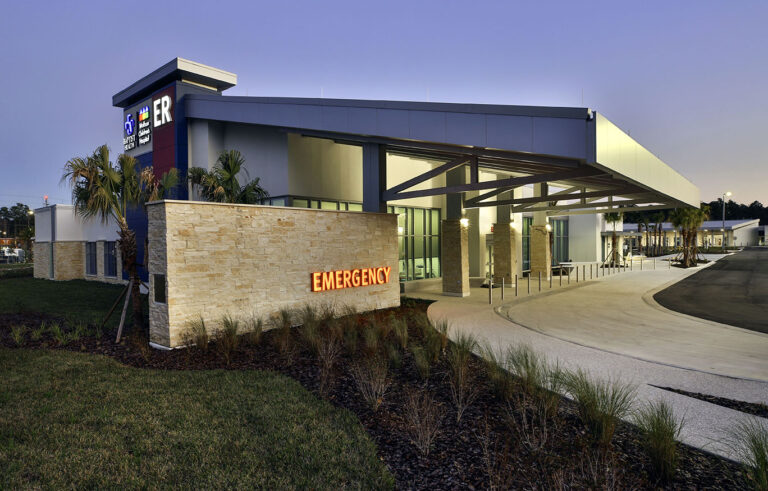
Texas and Florida continue to lead the nation in FSED development. Baptist Health operates eight FSEDs in Northeast Florida, including this $17.6 million, 23,879 s.f. facility completed in November 2024, and recently acquired a site for a ninth. (Photo courtesy of Baptist Health)
The story of freestanding emergency departments (FSEDs) can be compared to a roller coaster, as the product type experienced a meteoric rise in development in its early years, followed by a slowdown, and then, in recent years, a resurgence of popularity.
Prior to the 2000s, FSEDs were hardly even a product type, as, by most accounts, there were probably fewer than 50 of them nationwide, mostly to bolster underserved and rural areas of the country.
But, starting in about 2005, FSEDs became all the rage, as the number of such facilities grew by 75 percent in about 10 years, according to data from a variety of sources, including Boston-based Emergency Medicine Network and its National Emergency Department Inventory (NEDI). It is estimated that there were 566 FSEDs nationwide as of 2016.
During the second half of the 2010s, FSED development continued almost unabated in some states, especially in Texas, Colorado, Ohio, Arizona and Florida, bolstered by weak or nonexistent certificate of need (CON) laws, rapid suburban population growth, and high numbers of privately insured patients.
However, FSED development then slowed considerably in those areas, and others. Growing criticism centered on high patient costs – as FSEDs typically billed at full hospital ED rates – along with concerns about cherry-picking privately insured patients and locating facilities in affluent suburbs rather than truly underserved areas. As a result of the backlash, FSEDs came under increased regulatory scrutiny in many states, prompting both investors and health systems to hit pause on new projects.
Independent FSEDs – those not affiliated with hospitals and health systems – took the biggest hit. Adeptus Health, once the nation’s largest independent operator of FSEDs, filed for Chapter 11 bankruptcy in 2017 and ultimately Chapter 7 liquidation in December 2020. The firm struggled due to high operating costs, heavy debt from rapid expansion, criticism over billing practices (charging full hospital ER rates) and the COVID-19 pandemic. At its peak, Adeptus operated at nearly 100 locations, mostly in Texas. But many of its facilities closed, while others were sold off to hospital systems or other buyers.
Some other independents, including SignatureCare, Neighbors Health and others, suffered a similar fate.
Nearly 850 FSEDs and growing
However, as noted, FSEDs have experienced another resurgence,
The full content of this article is only available to paid subscribers. If you are an active subscriber, please log in. To subscribe, please click here: SUBSCRIBE
